
Demo Analyzer
What a label hears before it replies.
musictracker.io
01 / 16
You sent it. Nothing came back. You still do not know why.
02 / 16
How it works
How a demo gets its numbers
The File
Your Browser Reads It
Loudness, Peak, Dynamics, Width, Low End
Compared Against Released Tracks In Your Genre
The audio never leaves your machine.
03 / 16
Measured,
not guessed.
not guessed.
04 / 16
05 / 16
What comes back
1
2
3
1
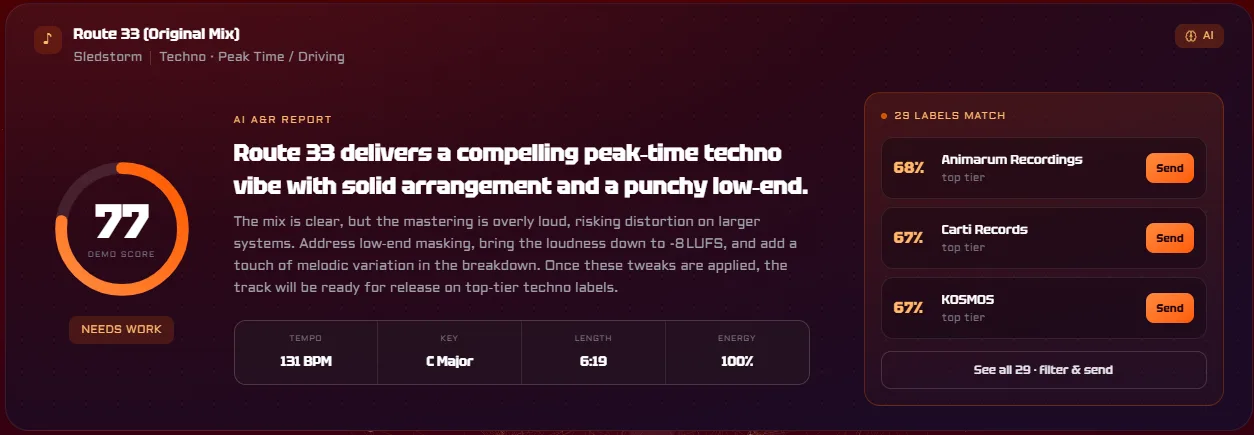
A score, and a verdict in words.
2
The reading, and what to change about it.
3
The labels sitting closest to it.
06 / 16
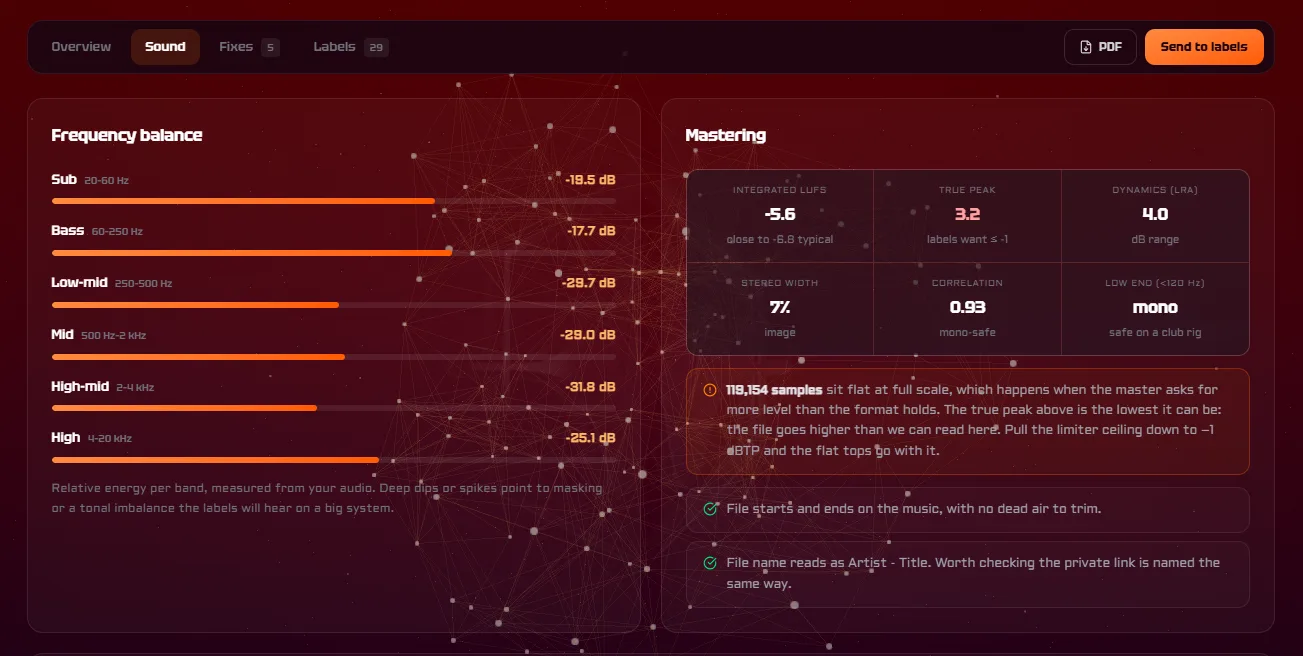
Your value, and the typical one
The reading sits beside the range measured off released records.
07 / 16
Six readings
What a label notices when it is wrong
Integrated loudness
Too loud and it distorts on big systems.
True peak
Above the ceiling and playback clips.
Dynamics
A flat range reads as a squashed master.
Stereo width
Too wide and the image stops holding.
Correlation
Phase trouble collapses the mix in mono.
Low end
Kick and bass fighting for one space.
08 / 16
A red reading is not a rejection. It is a note.
09 / 16
Every problem arrives with what to change
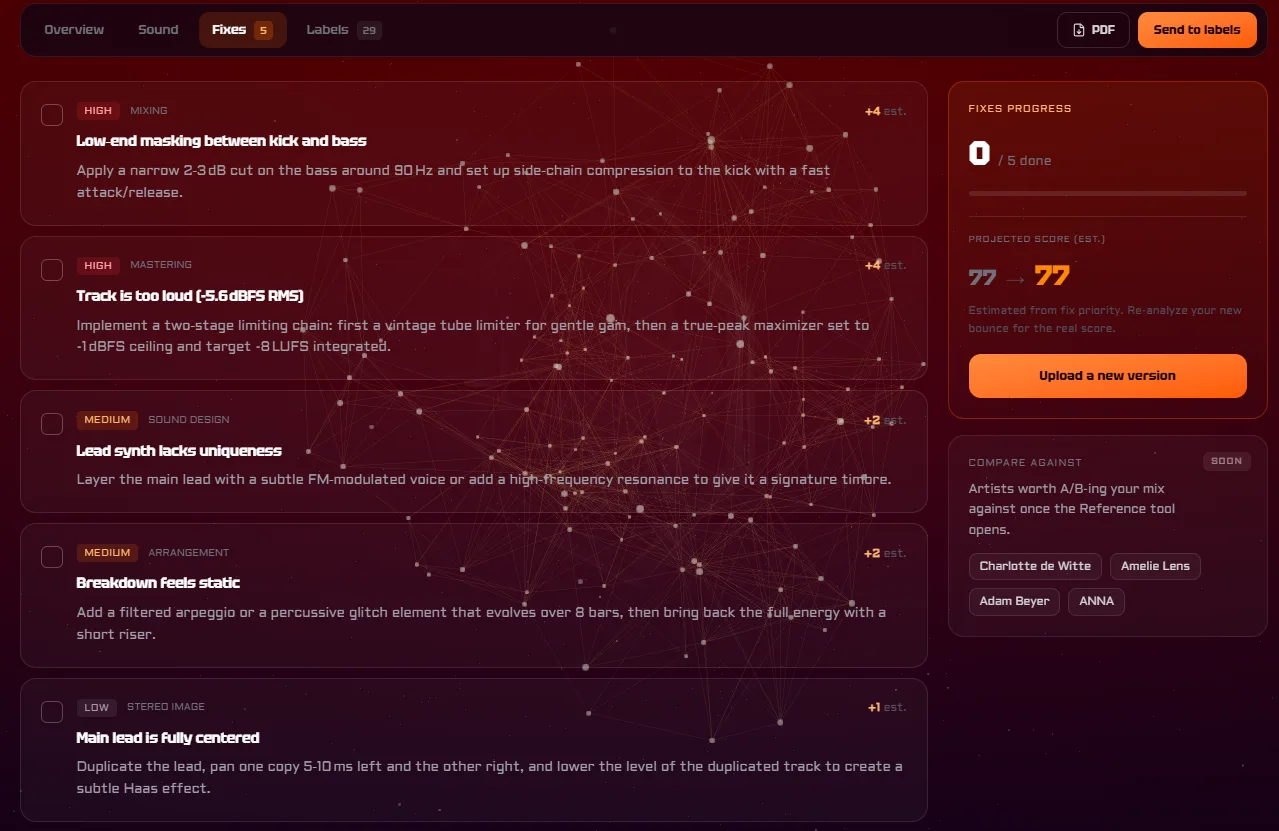
The reading names the problem. The line under it names the move.
10 / 16
Then it asks a different question. Who releases this?
11 / 16
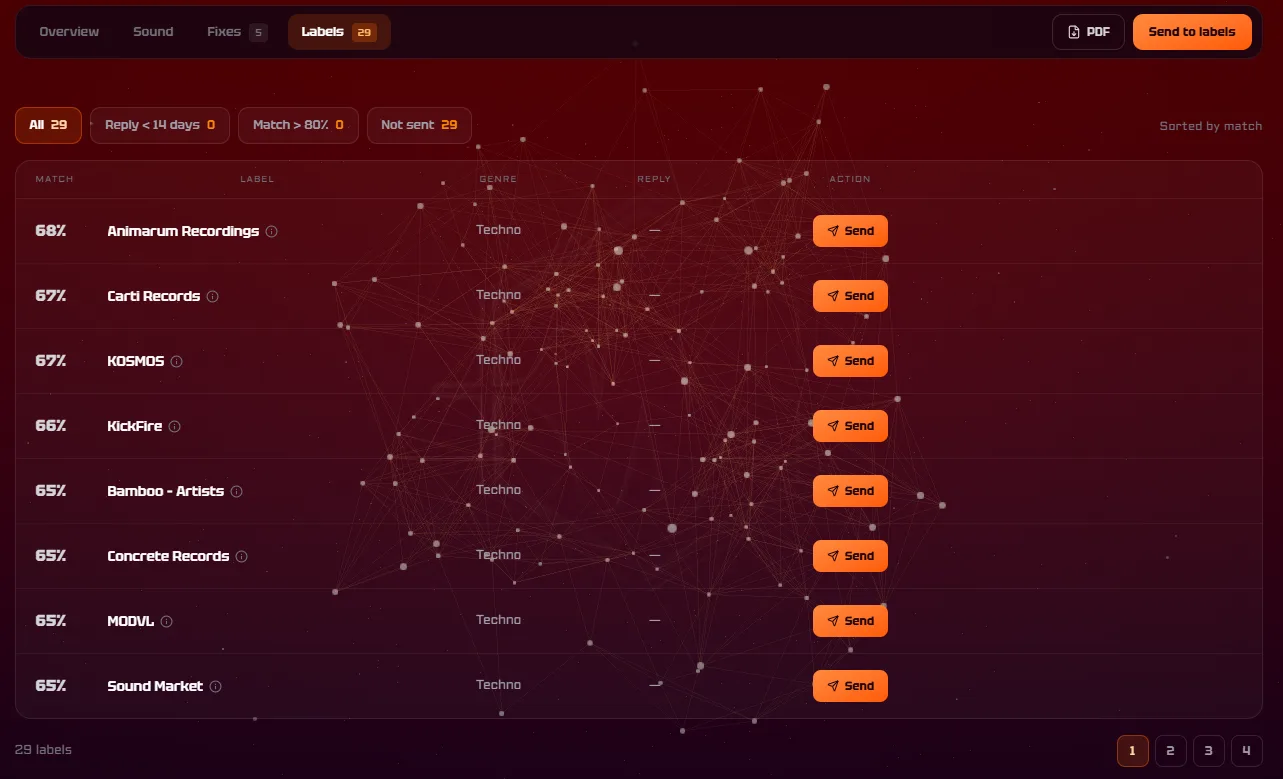
The list it gives back
1
2
1
The match score. How close your numbers sit to theirs.
2
The genre it matched on.
12 / 16
Matching
How a label is matched
The Genre You Entered
The Numbers We Measured
Labels Whose Recent Releases Sit In The Same Range
The genre comes from the form you fill in.
13 / 16
What the targets are built on
322
released tracks measured
15
genres with their own loudness target
14 / 16
What it does not do
It does not upload your audio.
It does not send your track anywhere.
It does not judge taste.
It does not speak for any label.
15 / 16
Run one track through it before you send the next one.
musictracker.io/demo-analyzer
16 / 16