
Label Tools
Six screens for running a label.
Forty demos this week. Which three are worth your evening?
Not a list of features but one path
A track arrives, you decide, it belongs to somebody, that somebody gets a date, the date earns money, and at the end of the quarter you find out how well you handled all of it.
A demo does not arrive as a link you have to open. It arrives measured.
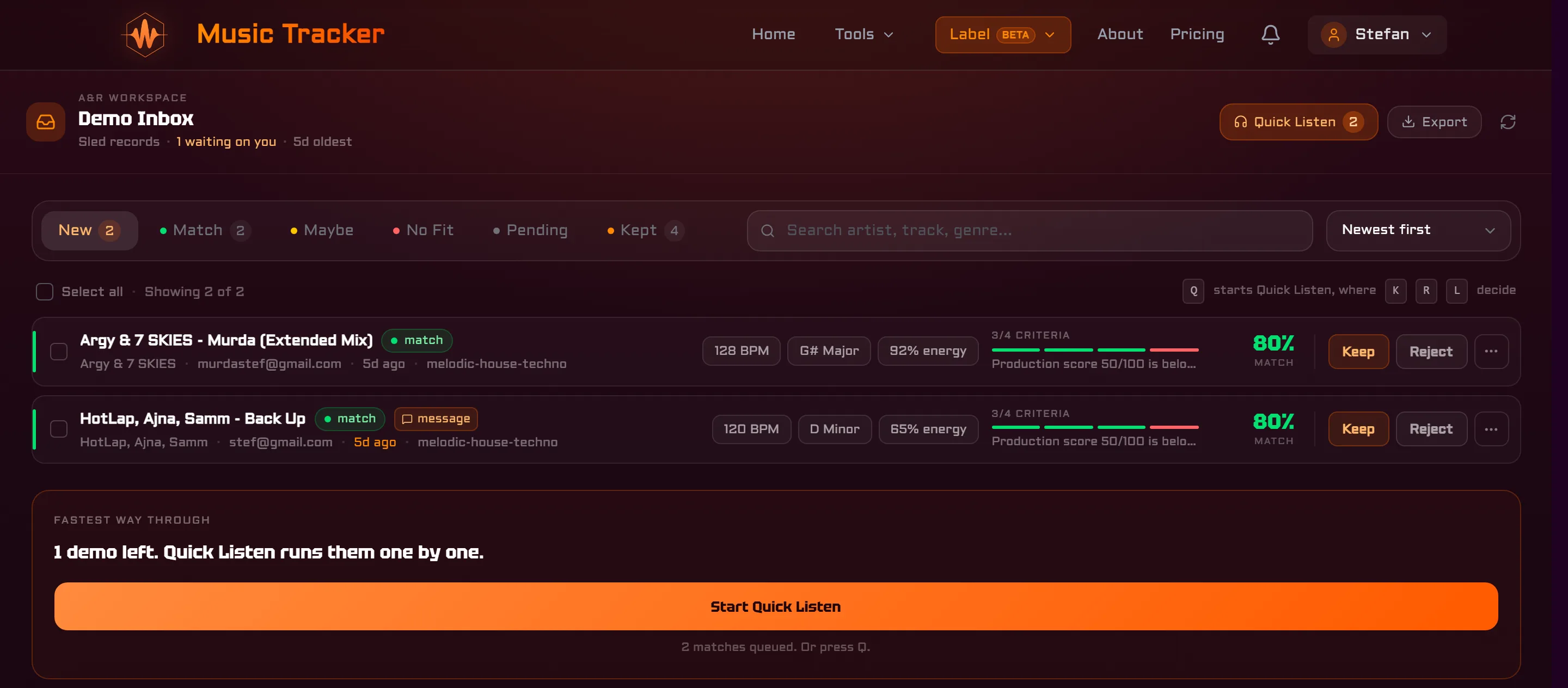
128 BPM / G# Major / 92% energy, measured off the track itself.
3/4 criteria and 80% match, against the ranges your label set.
New, Match, Maybe, No Fit, Pending, Kept. Nothing is deleted.
Measured,
not estimated.
Not one number is estimated
The score is not one number with nothing behind it.
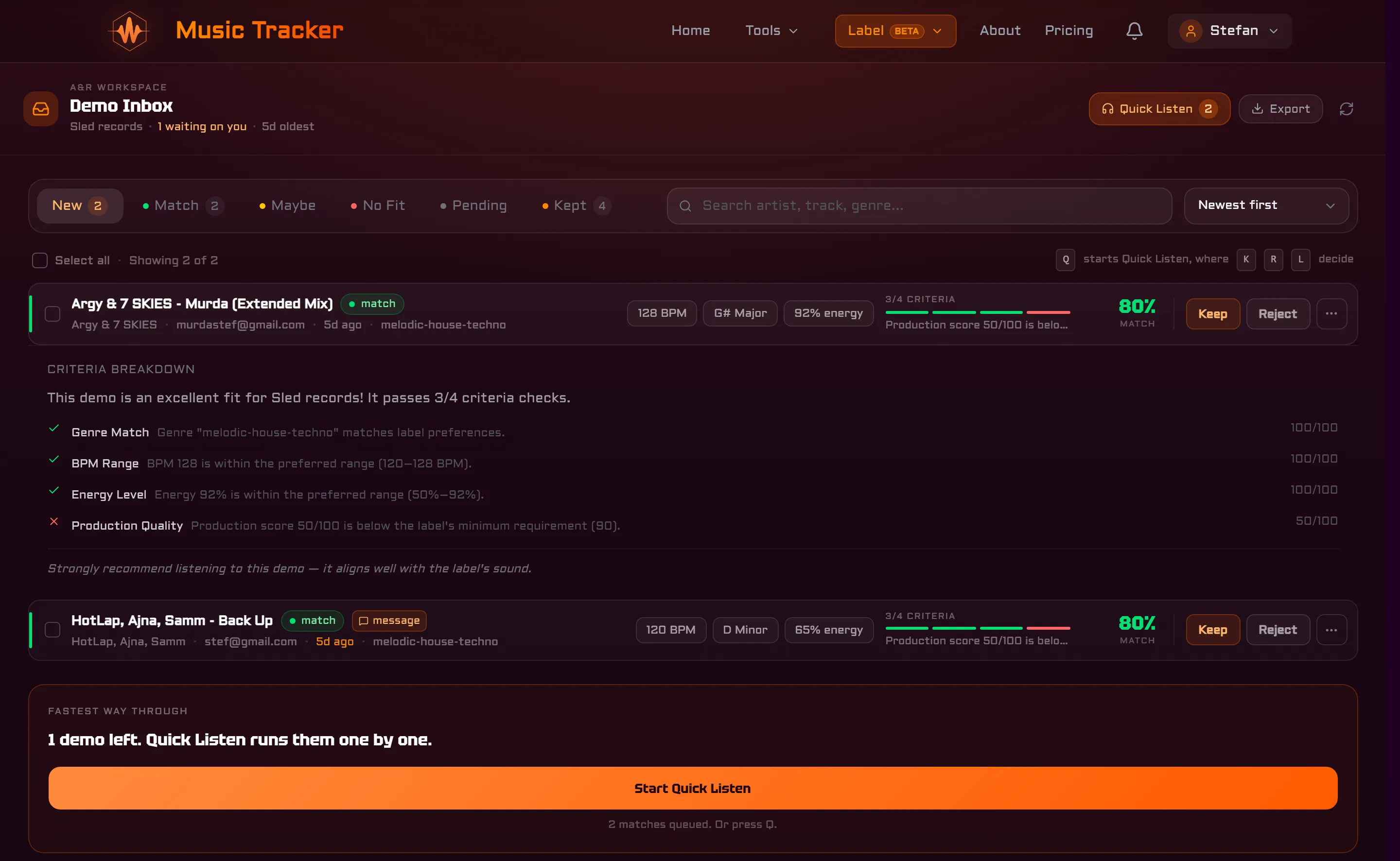
Here the genre, the BPM and the energy are all in range and the production is not: 50 out of 100, where the label asks for at least 90.
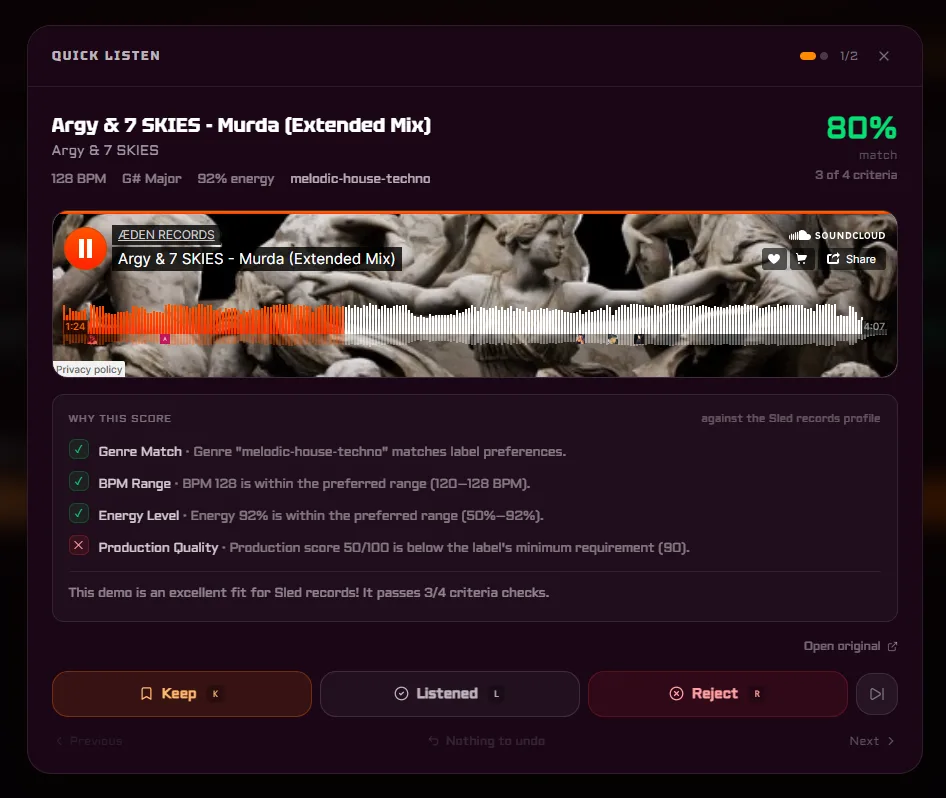
You listen, then decide from the keyboard.
K keeps it, R turns it down, L means you have heard it and will come back. The moment you decide, the next one opens by itself.
A decision is not the end of something, it is the start of it.
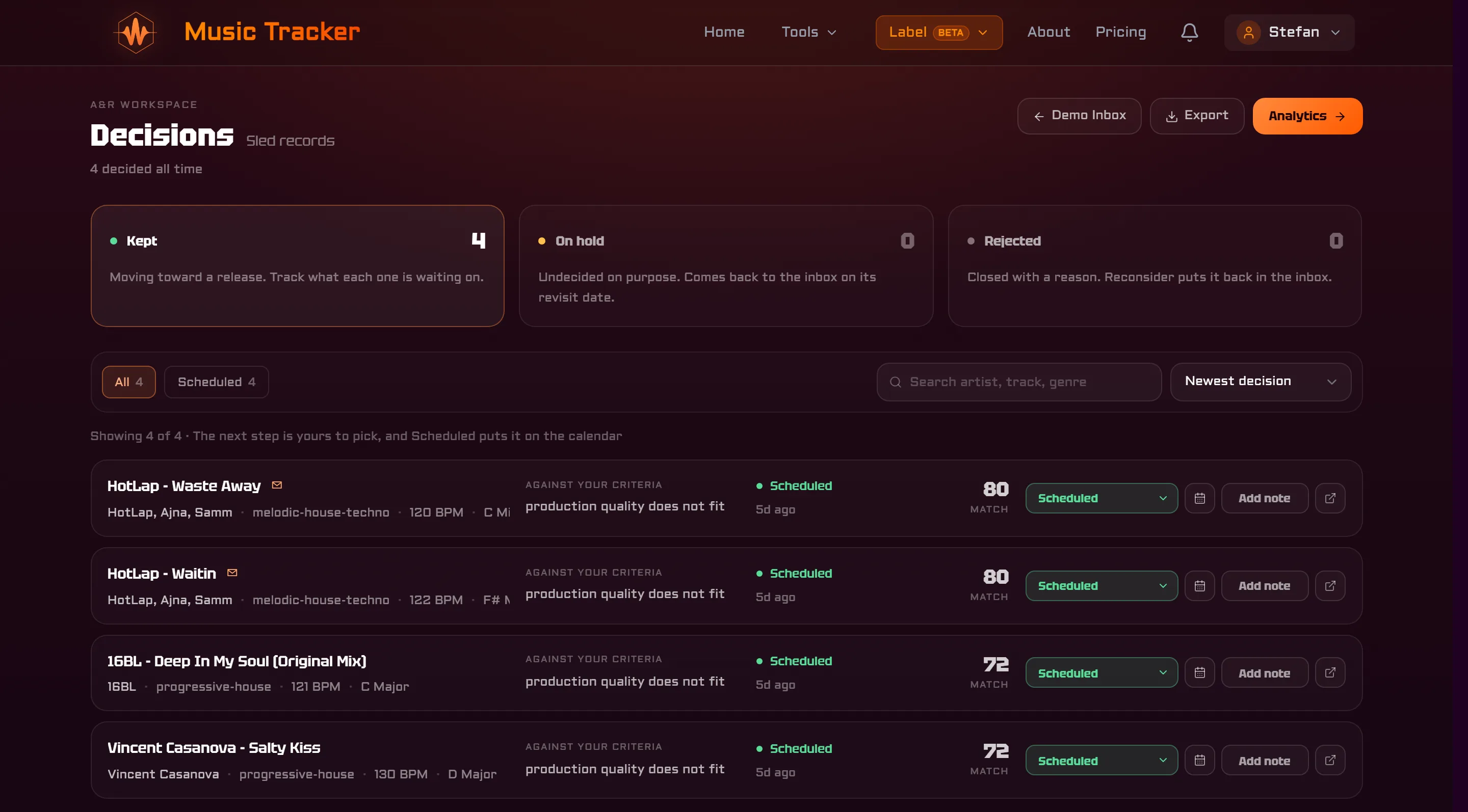
Every kept track has a stage it has reached: contract sent, stems in, release scheduled.
The split lives on the artist record and that is the only source of truth.
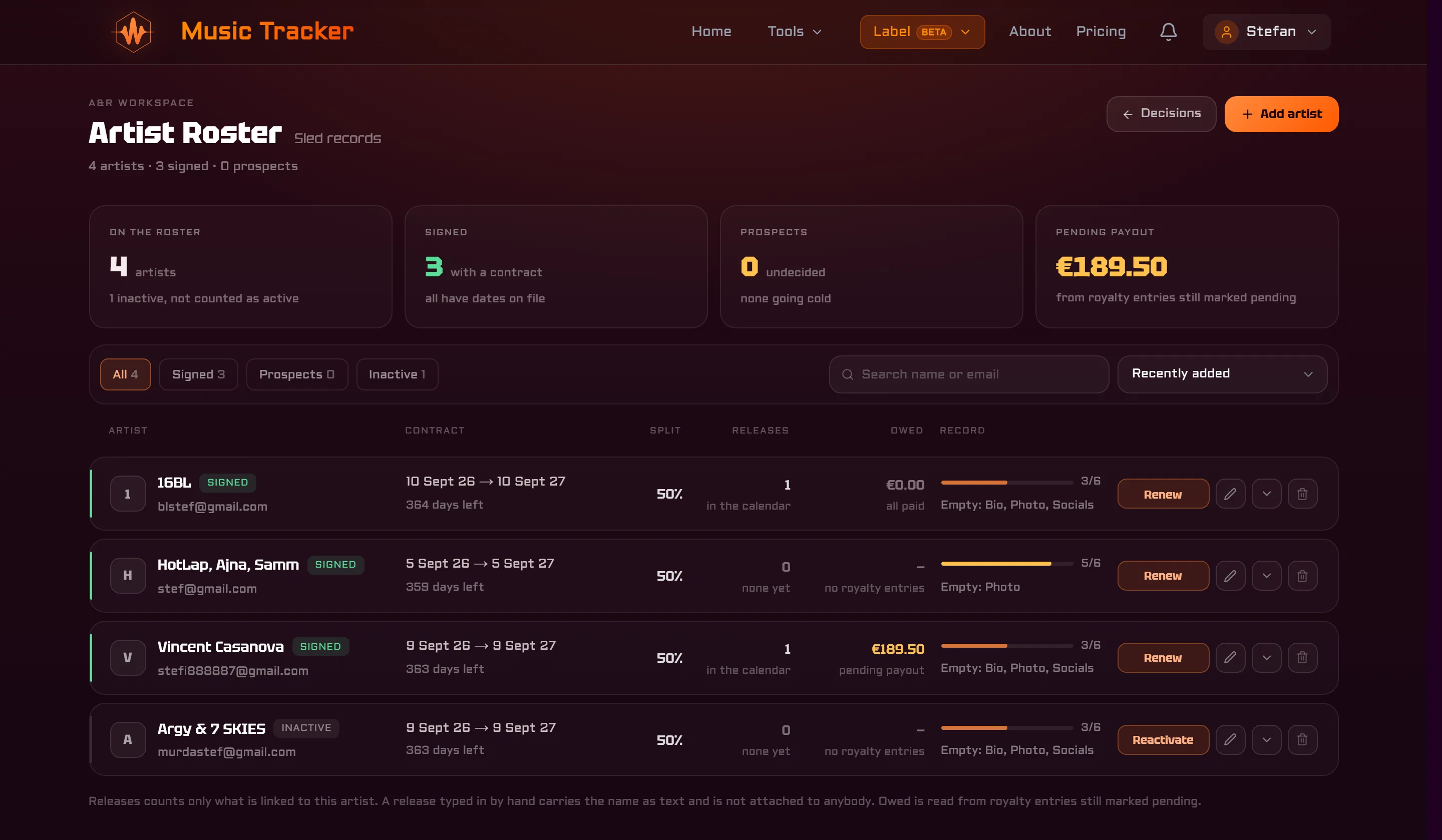
Everything calculated later inherits that number, so there is no version of it living in somebody's head.
One number governs the roster.
A release is not just a date. It is six things that have to be finished before that date.
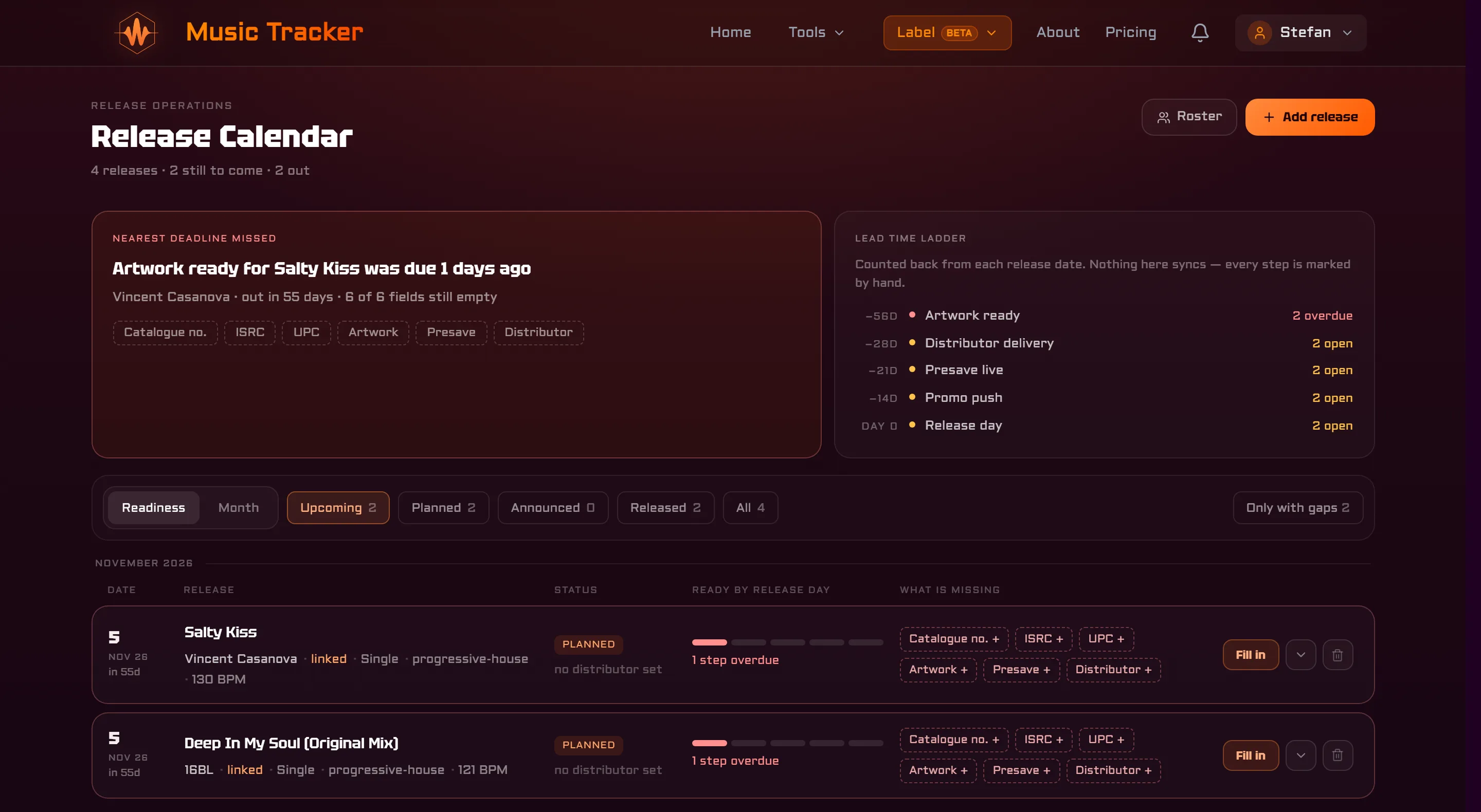
The deadline that has already gone past.
Catalogue no., ISRC, UPC, Artwork, Presave, Distributor. Still empty.
Four figures at the top, then the list by artist.
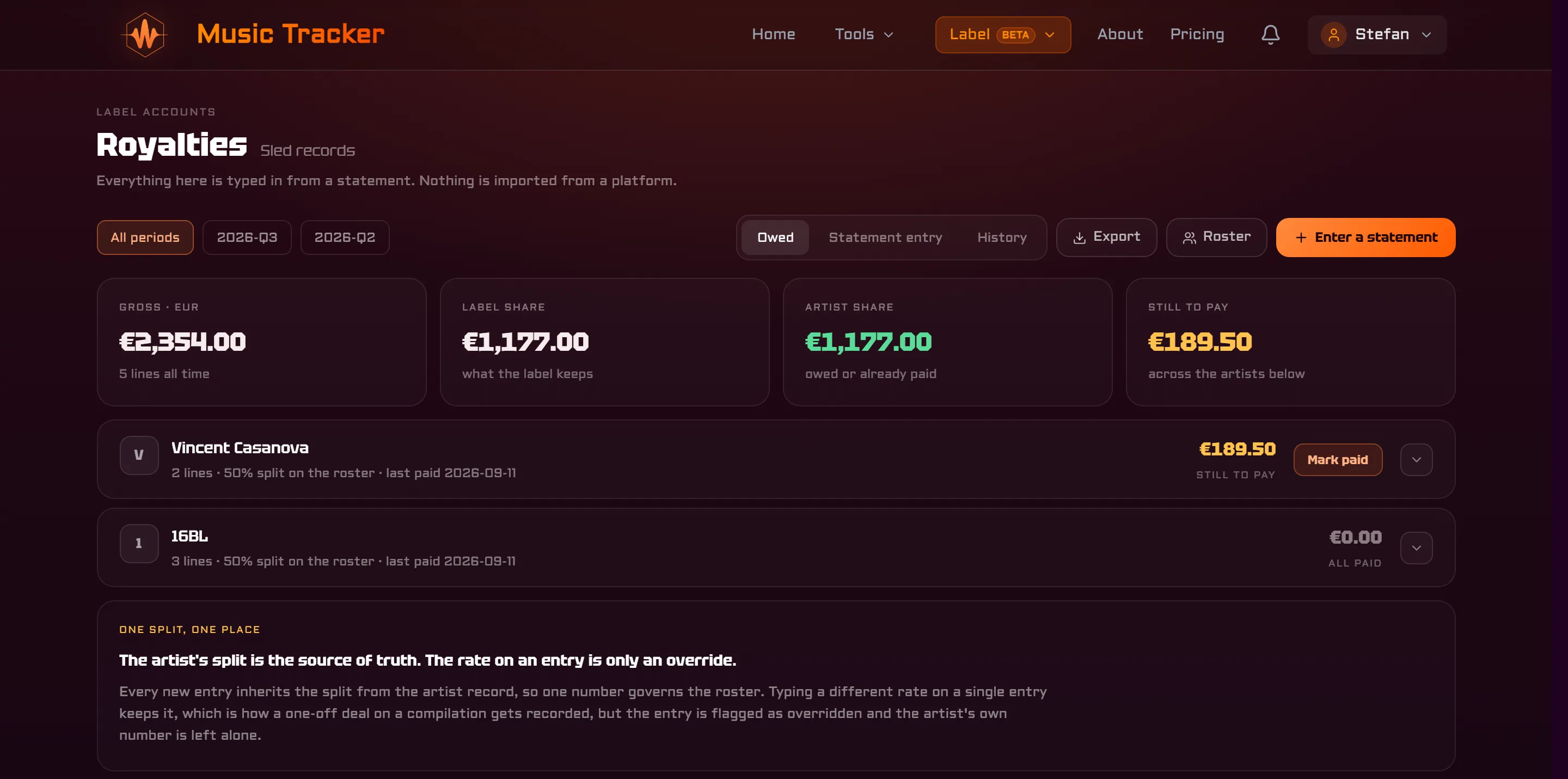
Currencies are never added together: a quarter with two of them stays on two lines, because adding them would need an exchange rate nobody wrote down.
Every line inherits the split from the artist record.
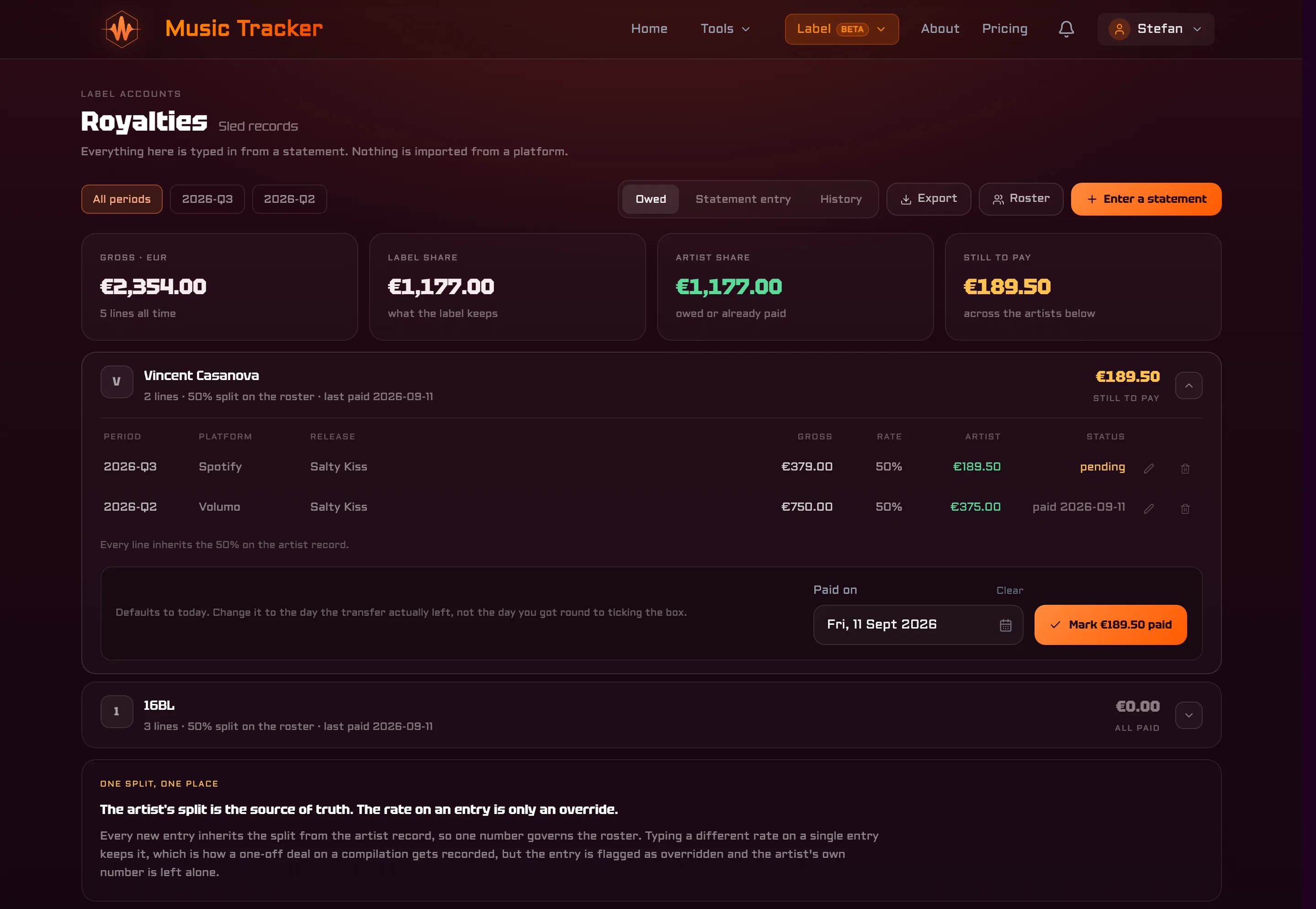
Type a different rate on one of them and that line is flagged as an override, while the artist's own number stays exactly where it was.
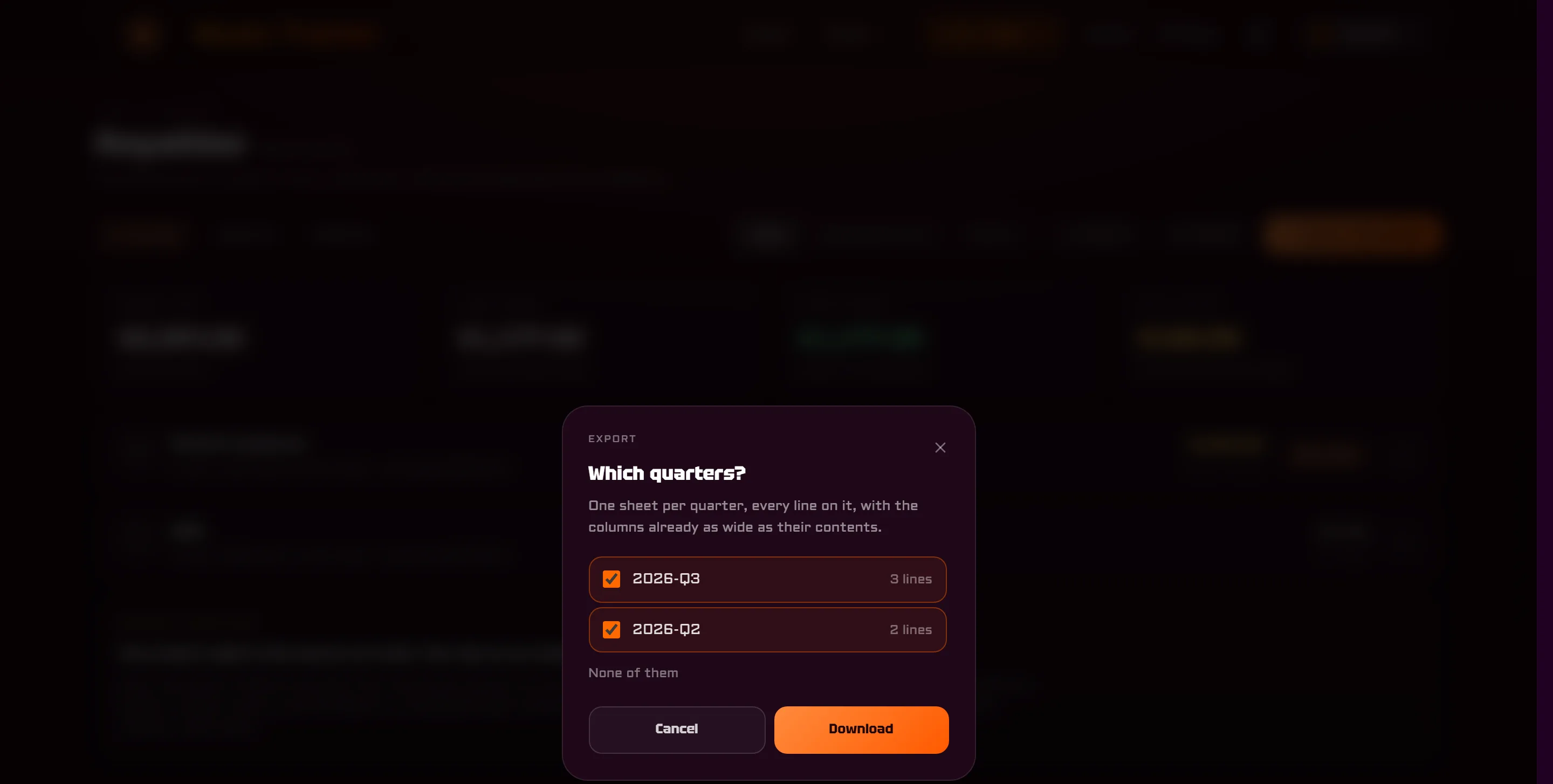
You pick which quarters go into the file.
One sheet per quarter, and the amounts come out as numbers rather than text, so an accountant can sum the column.
A mirror, not a sales report.
This is not a sales report. It is a mirror.
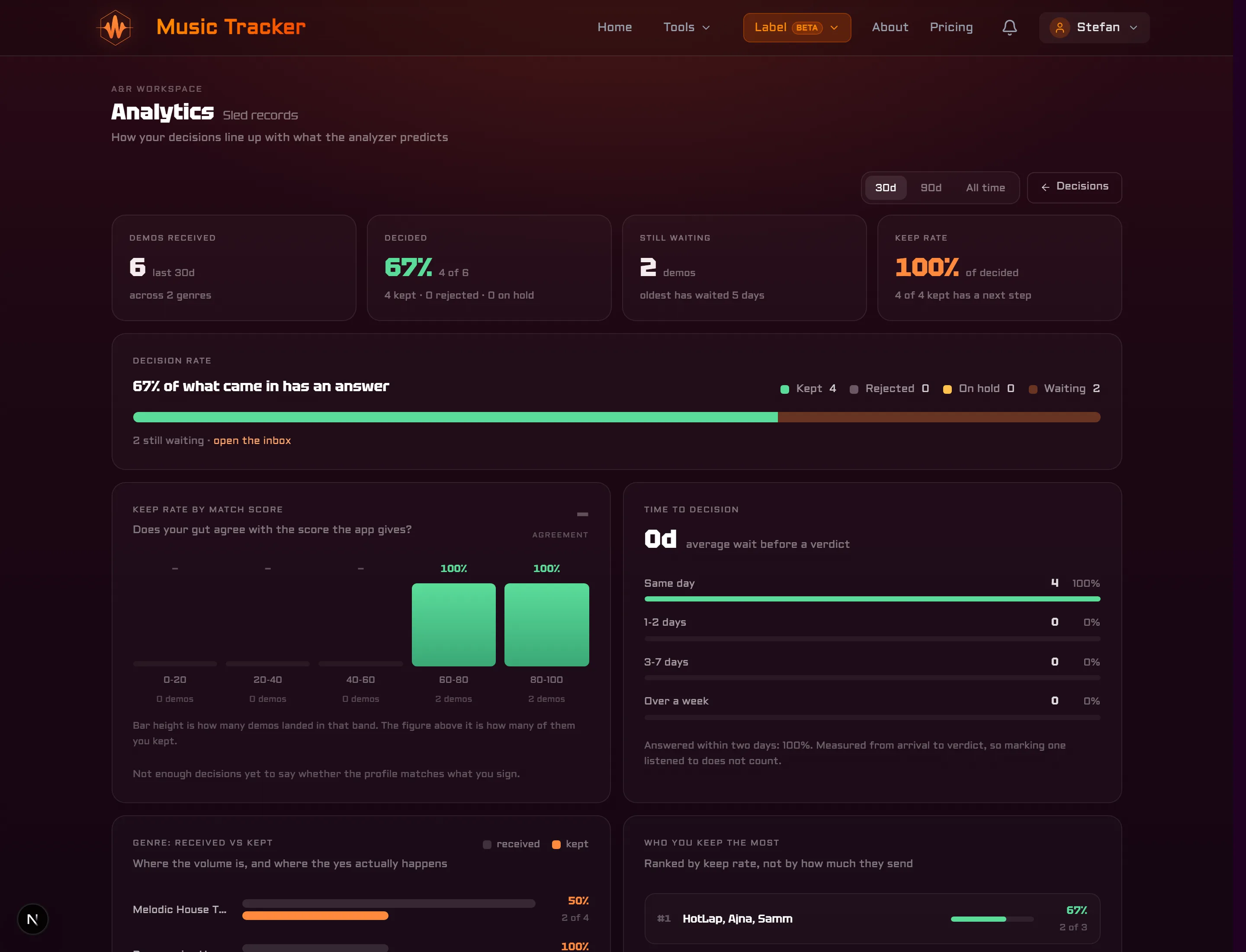
How much came in, how much of it has an answer, how much is still waiting.
And how long the oldest one has been there.
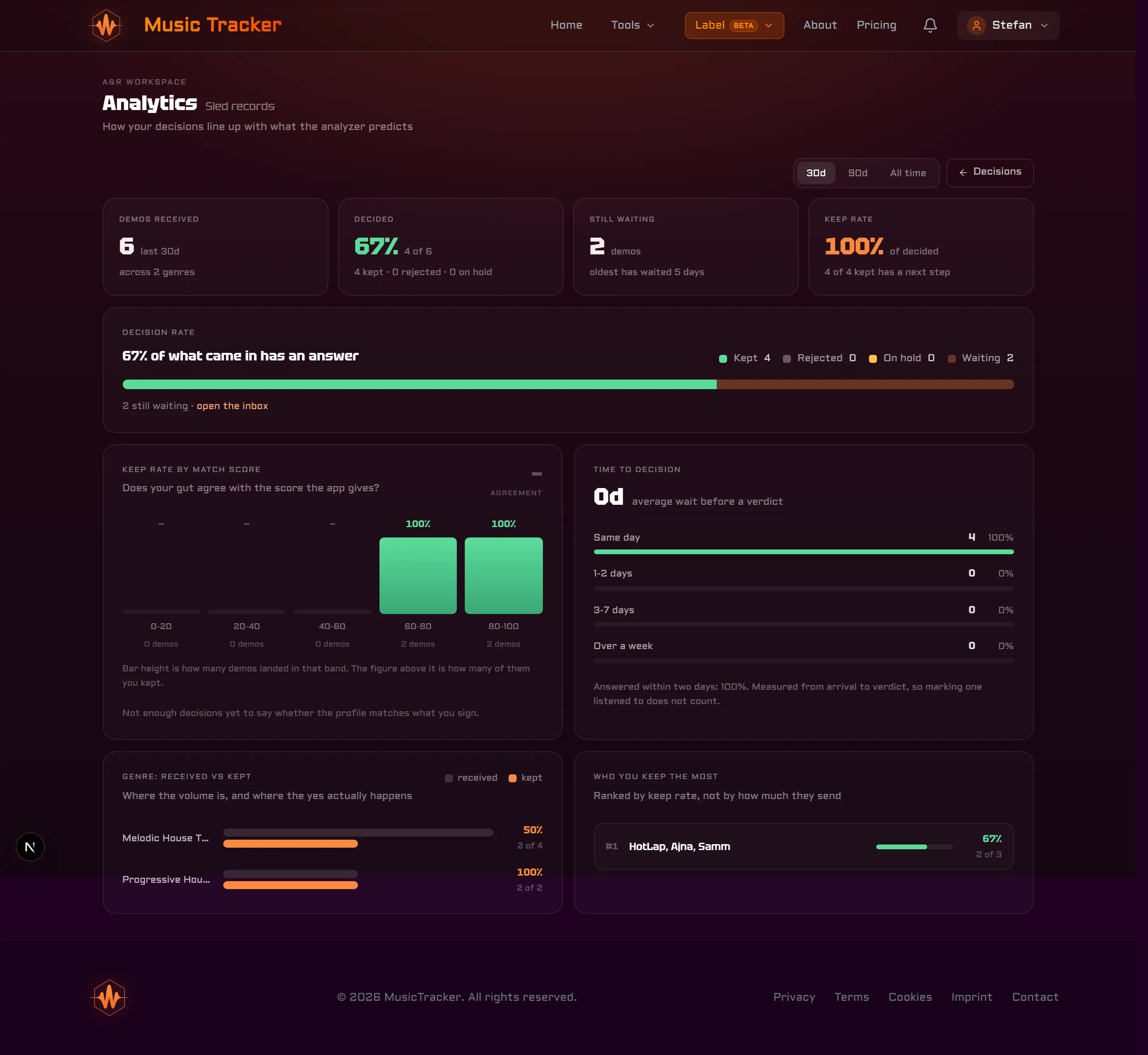
Whether your ear agrees with the score the app gives.
If you keep tracks that scored low, it is the label's criteria that are set wrong, not your ear. If you keep the ones that scored high, the app is saving you time on every demo after this one.
A demo gets called too quiet or too squashed against a number, so the number had better be real. Ours was measured off released records, genre by genre.
Bring one week of demos and see what happens.
The label side is in beta and labels are being let in one at a time.